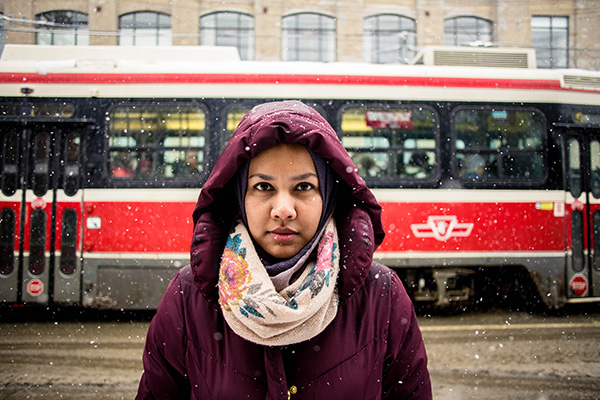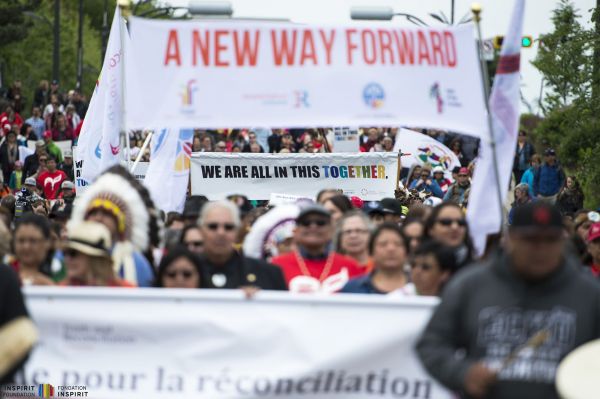
Reconciliation concerns all of us. We saw this in action in the diversity of young changemakers who travelled with us by bus from Toronto to join the Walk for Reconciliation in Ottawa on May 31, 2015.
The Walk kicked off the Truth and Reconciliation Commission’s (TRC) closing events on May 31 – June 3, 2015. The TRC concluded its six-year investigation into the legacy of the Indian Residential School System with a report that included 94 recommendations on ways to redress damages suffered by the schools’ survivors. These recommendations will lay the foundation for more positive and productive relationships between indigenous and non-indigenous people in Canada.
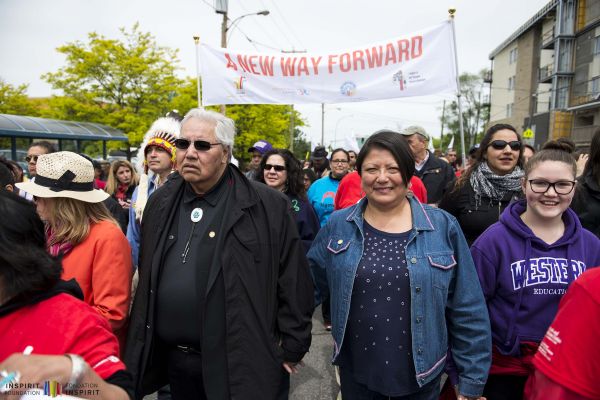
Justice Murray Sinclair walks with thousands of others during the Walk for Reconciliation in Ottawa on May 31, 2015.
One of the most compelling messages from this historic week was that “We are all in this together”. The Honourable Justice Murray Sinclair asserted, “we must all call for an ongoing progress of reconciliation, regardless of cultural background or personal history of connection to this dark history. Reconciliation is not an aboriginal problem; it is a Canadian problem. It involves all of us.”
Justice Sinclair’s words resonate with our belief that young people have the potential, energy and passion to help reconcile the relationship between aboriginal and non-aboriginal communities. The people who filled the streets from Gatineau to Ottawa City Hall were from a wide range of backgrounds, ethnicities and beliefs and many were representing projects and movements that contribute towards social change.
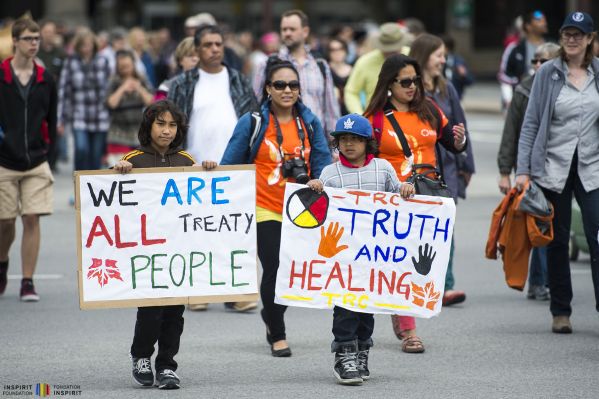
People young and old came on the bus from Toronto to join the Walk for Reconciliation.
Inspirit is proud to support initiatives like the 4Rs Youth Movement, Jumblies Theatre’s Train of Thought, iHuman Youth’s Knowledge is Pow Wow as well as a partnership between Canadian Roots Exchange and KAIROS. The different projects around reconciliation give diverse Indigenous and non-Indigenous young people the opportunity to connect and build relationships with one another in creative ways, be it through collaborative art projects, media workshops or leadership training.
Such spaces for cross-cultural dialogue are necessary to foster future generations who will take on the challenge of reconciliation, according to 4Rs Youth Movement Executive Director Jessica Bolduc during the Inspiring Reconcili(action): Creating A New Way Forward panel. Fellow panelist, Chief Robert Joseph added that although we may be at different levels in our reconciliation journey, we all have a right to contribute to it.
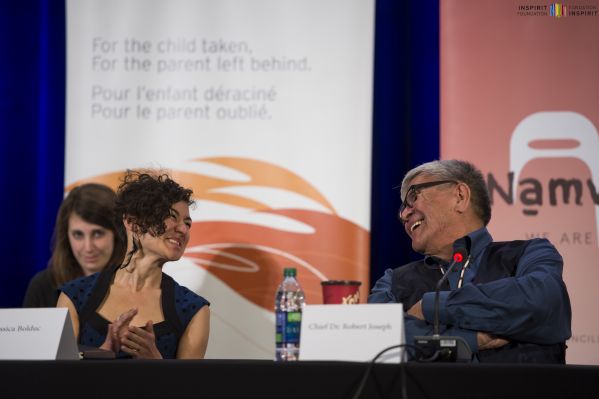
4Rs Youth Movement Executive Director (left) Jessica Bolduc and Chief Robert Joseph share a laugh during Reconciliation Canada's panel, Inspiring Reconcili(action): Creating a New Way Forward.
The young people we walked with in Ottawa showed us their passion for learning about Canada’s aboriginal history and culture. They were ready to reach across their differences and work with fellow changemakers to build new relationships and foster communities where every person feels welcome. We were deeply inspired by what we saw and we remain committed to supporting young people to work together to build a more inclusive and pluralist Canada. We also added our signature to the Philanthropic Community’s Declaration of Action.
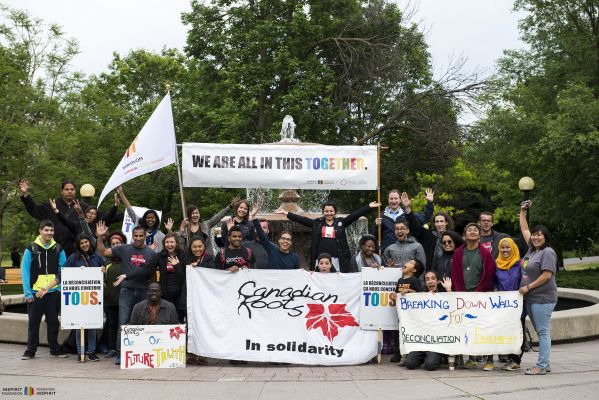
Some of the young people who came for the Walk for Reconciliation in Ottawa.
To hear about upcoming reconciliation initiatives and opportunities to get involved, signup to our newsletter or give us a shout on Facebook or Twitter. Don’t forget to check out the photos from the Walk and the conversation on Twitter below: